
Forgot to take the salmon out of the freezer? You can still have juicy, flaky salmon on the table in about 10 minutes thanks to this easy air fryer frozen salmon method where no thawing is required!
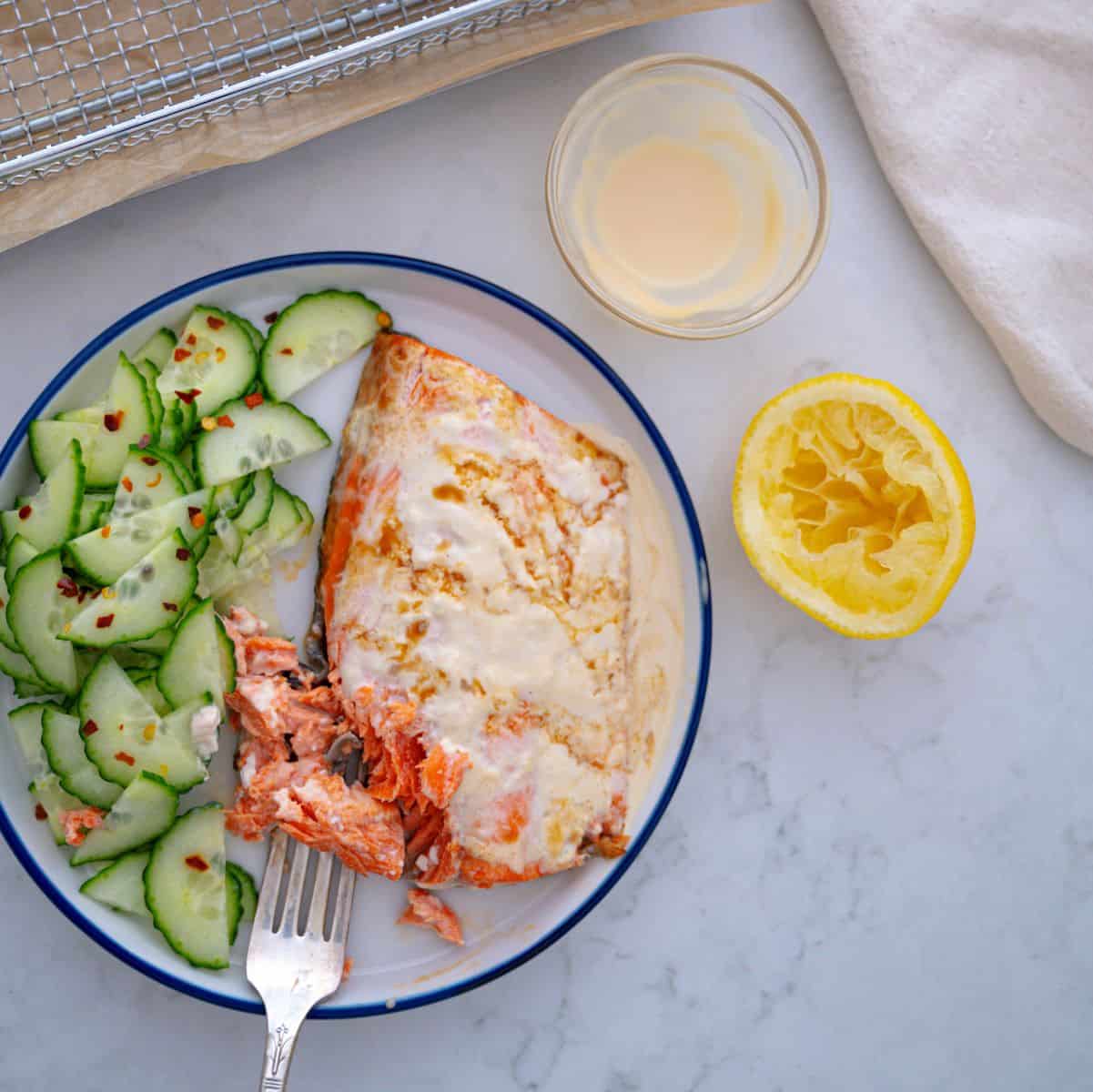
A simple lemon soy mayo drizzle keeps the salmon incredibly moist while adding just enough richness and brightness. The outside turns lightly golden while the center stays tender and flaky, making this one of my favorite quick seafood dinners for a busy night.
If frozen seafood is a staple in your freezer like it is in mine, you'll also love my Air Fryer Frozen Fish recipe for another quick, healthy dinner. And if you're craving salmon again later in the week, my Air Fryer Salmon Bites are one of my favorite ways to get crispy, flavorful salmon on the table fast.
Table of Contents
Why You'll Love This Air Fryer Frozen Salmon
- FAST – Ready in about 10 minutes
- EASY – No thawing required
- FOOLPROOF – Consistent results every time
- HEALTHY – Rich in omega-3s
- FLAVORFUL – Lemon soy mayo adds richness and brightness
- VERSATILE – Works with skin-on or skinless salmon
As someone who cooks seafood for a living, frozen salmon is one of the ingredients I rely on most. High-quality frozen salmon is often frozen shortly after harvest, which means you can keep it on hand and end up with an excellent dinner in little time.
Why This Method Works
I've tested many ways to cook salmon from frozen. Some recipes have you partially thaw it first; others have you cook it plain and season it later; and some have you completely overcook the salmon.
This is the method I come back to over and over to get perfectly cooked frozen salmon in the air fryer every time.
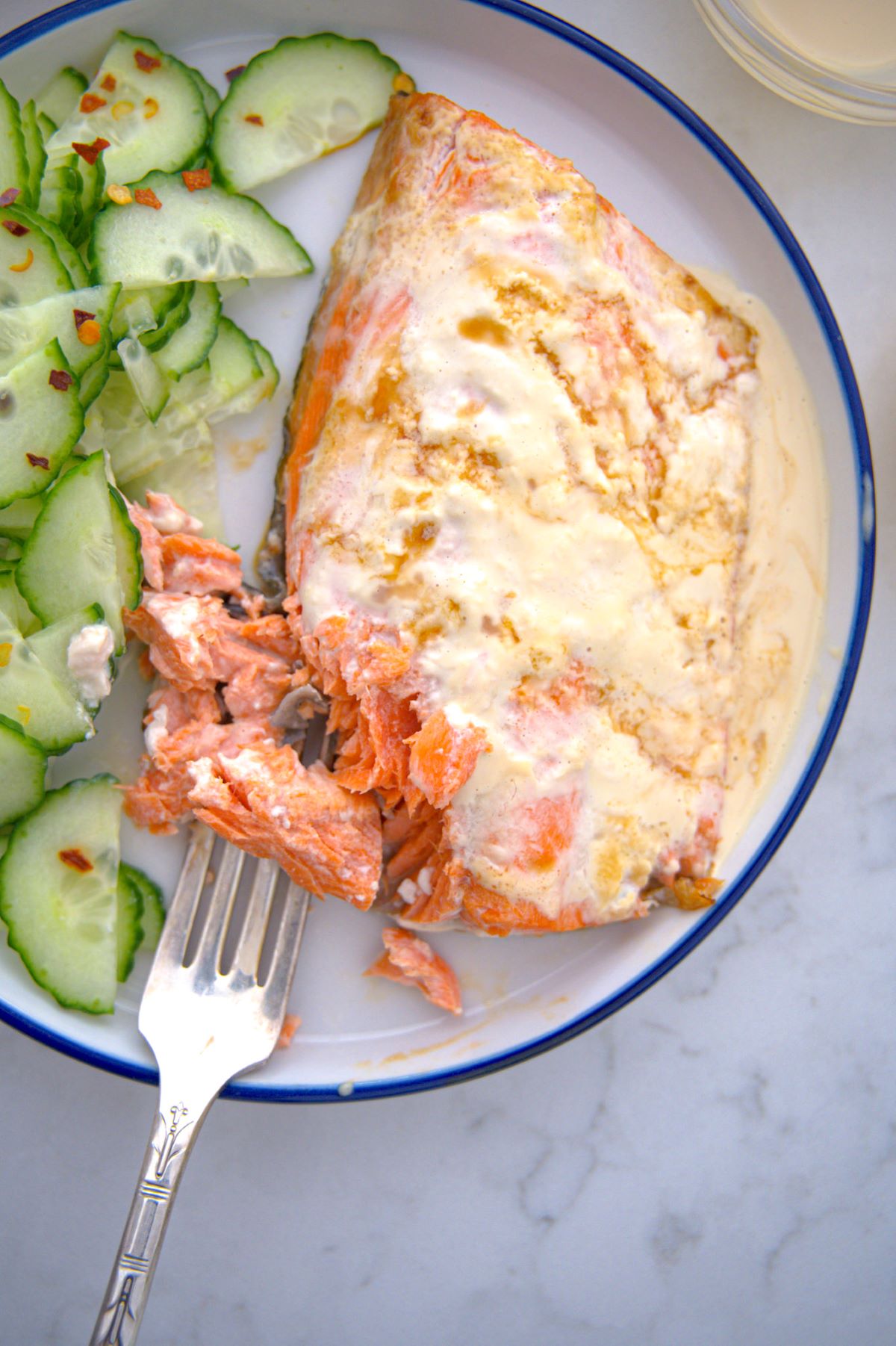
Preheating the air fryer gives the salmon an immediate blast of heat, helping the exterior cook quickly while the inside gently comes up to temperature. The mayo-based sauce acts as both a seasoning and a protective layer, preventing the fish from drying out while creating a silky finish.
Saving half of the sauce for serving is the little trick that makes people ask for this recipe.
Ingredients You'll Need
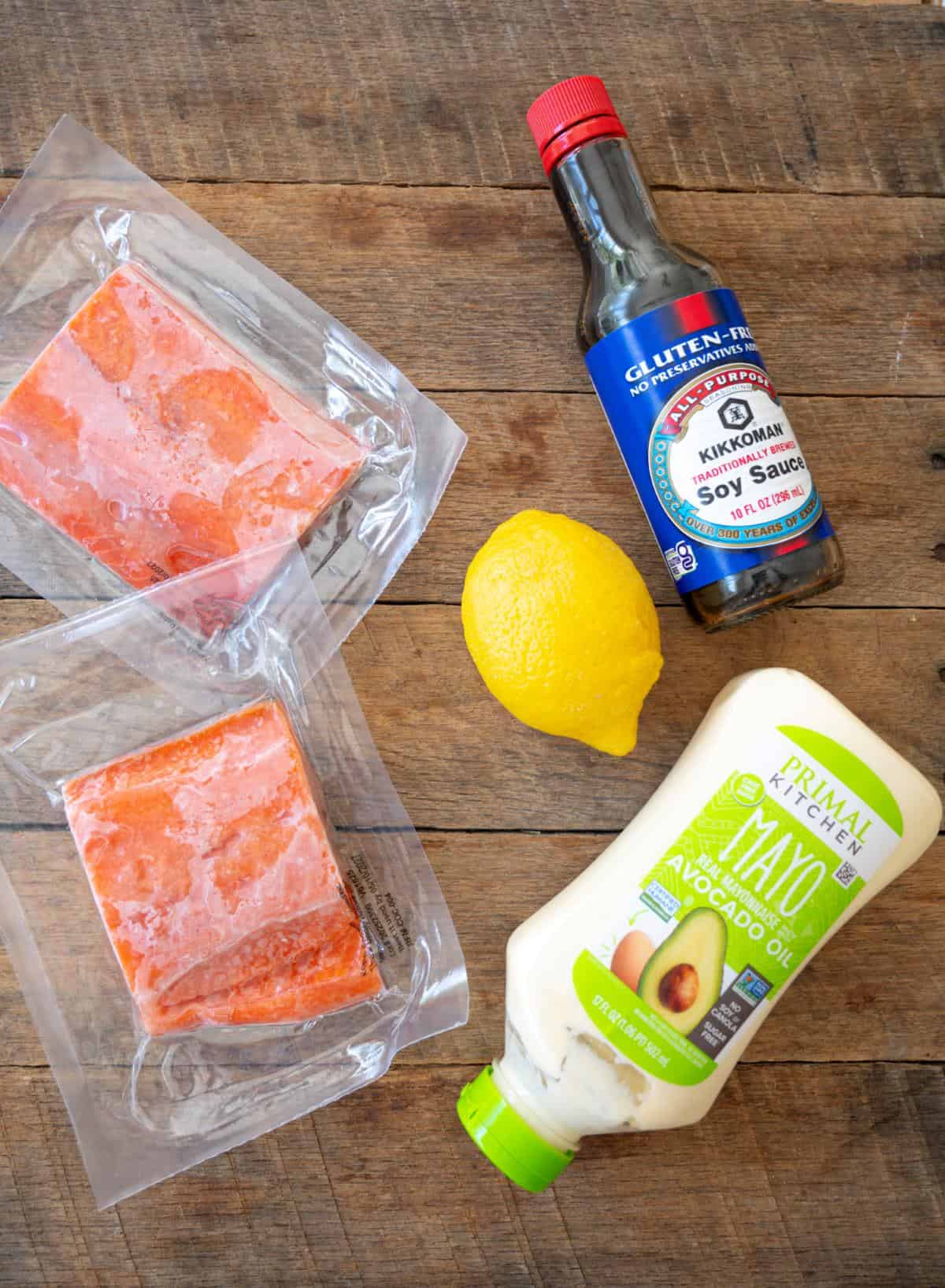
- 2 frozen salmon fillets (about 6 ounces each)
- 2 tablespoons mayonnaise
- 1 teaspoon soy sauce *look at ingredients notes below
- 1 teaspoon fresh squeezed lemon juice
- Kosher salt, to taste
Ingredient Notes
Frozen salmon: Wild salmon is my personal preference, especially sockeye or king, but this recipe works with whatever you have in the freezer. Keeping in mind that every fillet is shaped differently and the time will need to adjust.
Mayonnaise: Don't skip it. The mayo melts into the salmon as it cooks and helps lock in moisture.
Soy sauce: Adds savory depth without making the fish taste overly Asian-inspired. I use gluten-free soy sauce; you can sub for low-sodium or coconut aminos. You will just need to add more salt.
Fresh lemon juice: Brightens everything and balances the richness of the mayo.
How to Cook Frozen Salmon in the Air Fryer
Step 1: Preheat the Air Fryer
Preheat your air fryer to 350°F.
I know plenty of recipes skip this step, but I don't. Starting with a hot basket gives the salmon a better texture and more even cooking.
Step 2: Make the Sauce
In a small bowl, stir together:
- 2 tablespoons mayonnaise
- 1 teaspoon soy sauce
- 1 teaspoon fresh squeezed lemon juice
Set aside.
Step 3: Season the Salmon
Place the frozen salmon fillets on a plate.
Generously sprinkle the tops with kosher salt.
I don't add pepper here. I want the clean flavor of the salmon to come through, and the soy sauce already brings enough complexity.
Step 4: Drizzle Half the Sauce
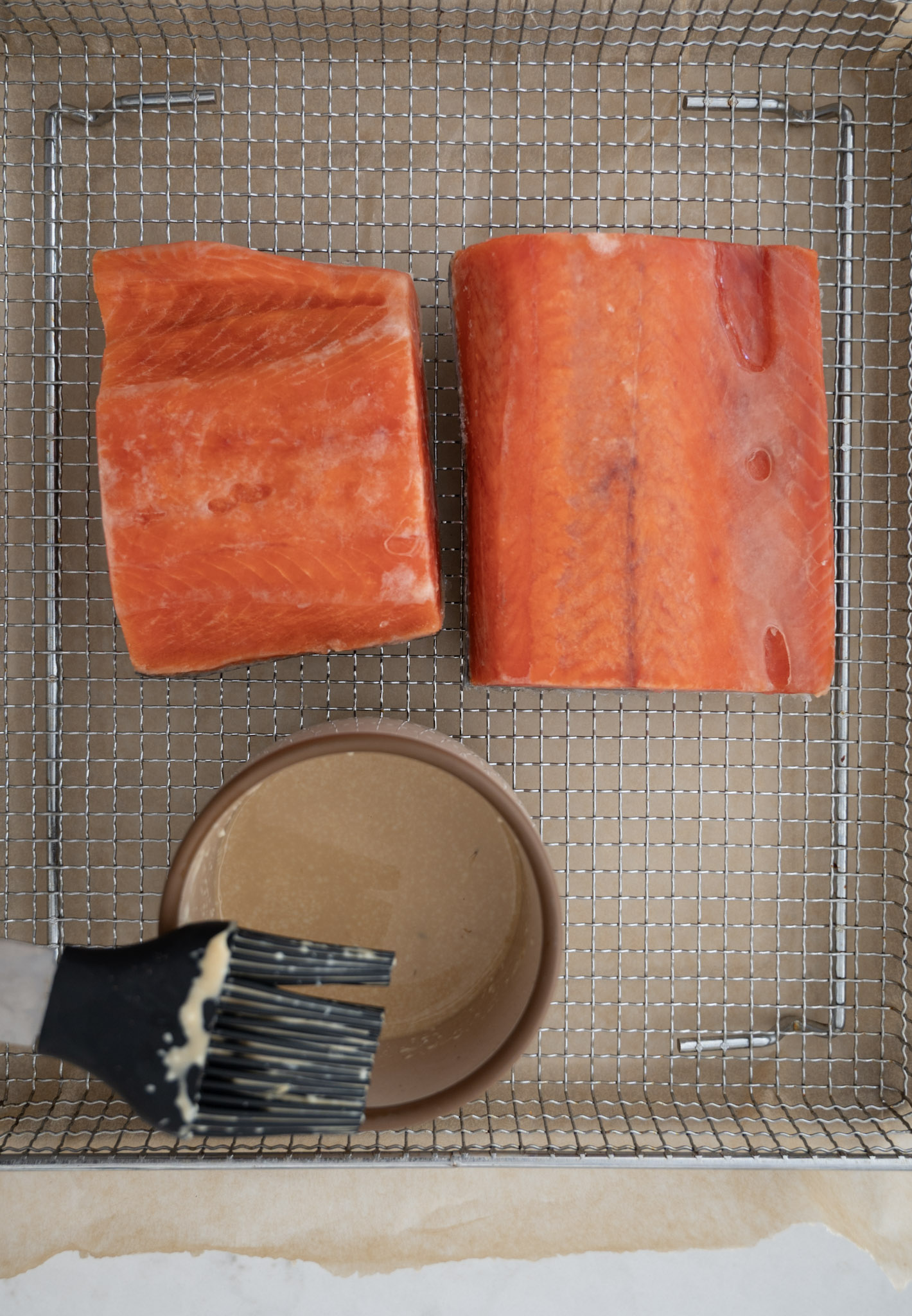
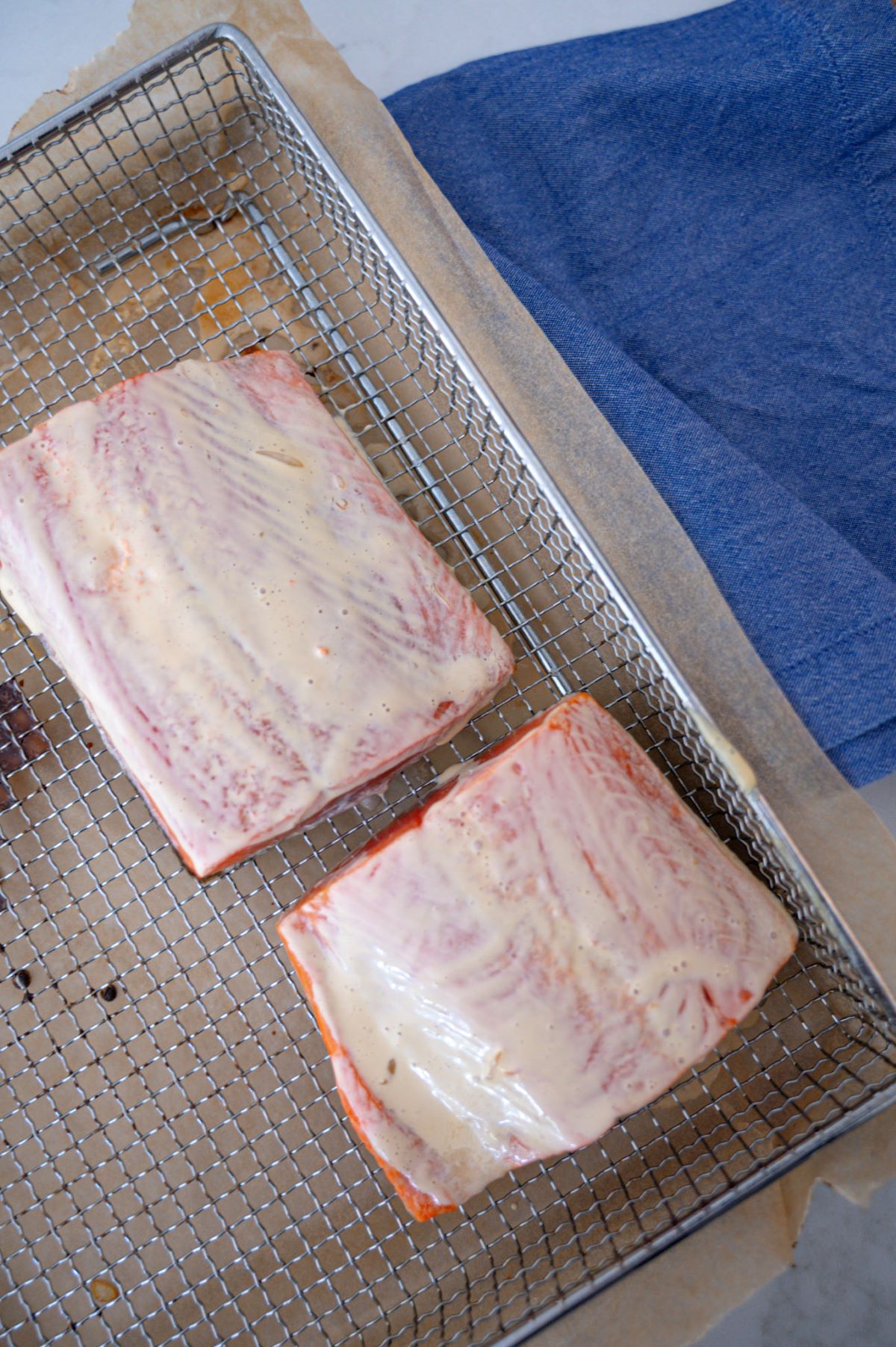
Spread about half of the lemon soy mayo mixture over the tops of the frozen salmon fillets.
Reserve the remaining sauce.
Step 5: Air Fry
Place the salmon in the air fryer basket in a single layer.
Cook at 350°F for 9-12 minutes.
Cooking time depends on thickness:
- Thin fillets: 9-10 minutes
- Average fillets: 10-11 minutes (most frozen salmon fillets cook in this range)
- Thick center-cut fillets: 11-12 minutes
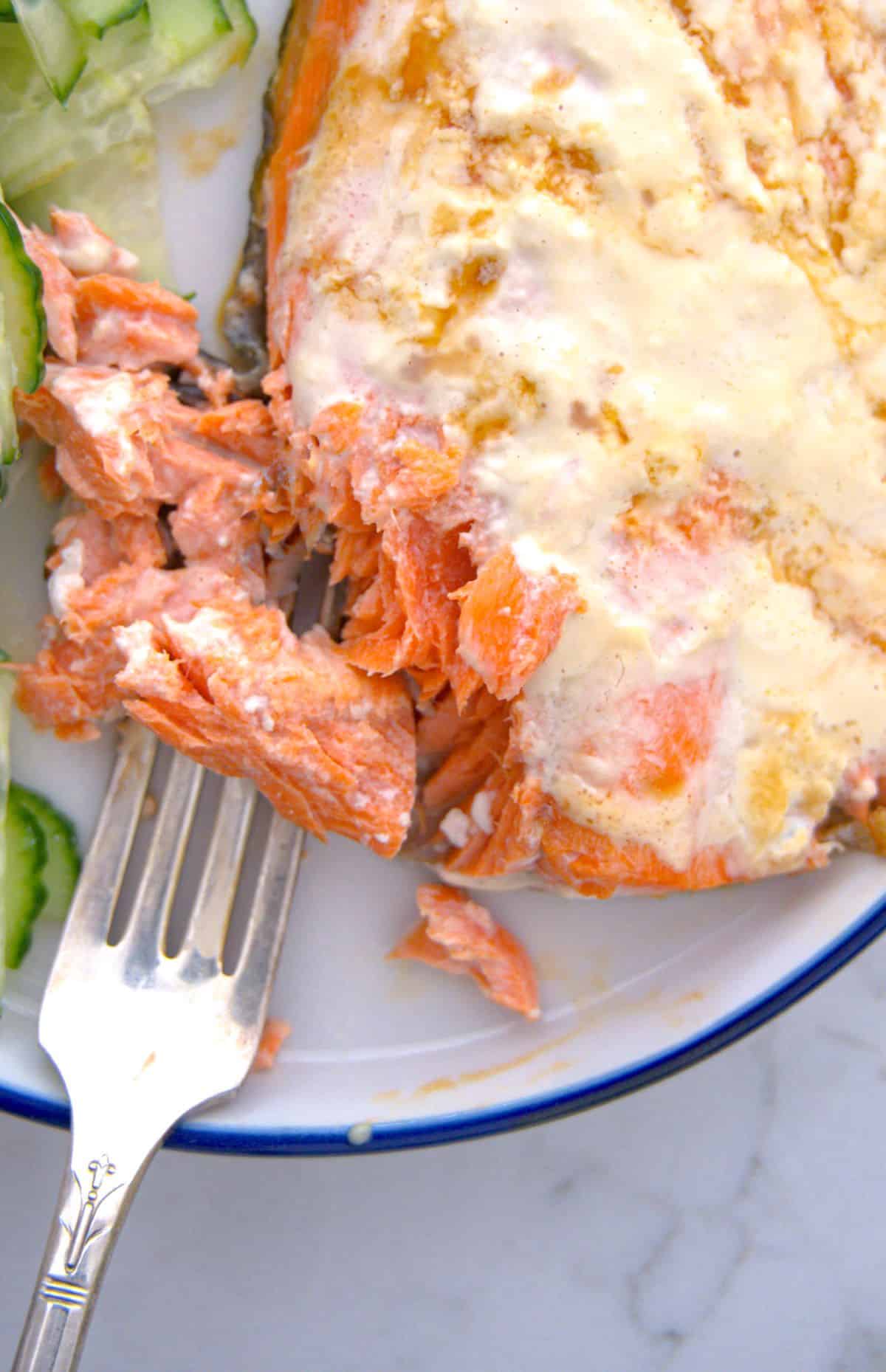
The salmon is done when it flakes easily with a fork and reaches an internal temperature of at least 135°F in the thickest part.
Step 6: Finish and Serve
Drizzle the reserved lemon soy mayo sauce over the hot salmon just before serving.
That final spoonful of sauce melts slightly into the fish and is honestly what takes this recipe from "easy weeknight dinner" to something you'll intentionally crave.
How Long to Cook Frozen Salmon in the Air Fryer
One of the most common questions I get is how long frozen salmon actually takes.
The answer depends entirely on thickness.
At 350°F:
- 1-inch thick fillets: about 8-9 minutes
- 1¼-inch thick fillets: 9-10 minutes
- Extra-thick fillets: 10-11 minutes
I start checking around the 8-minute mark.
Salmon can go from perfectly flaky to overcooked very quickly.
Can You Cook Salmon Straight From Frozen?
Absolutely.
In fact, I do it all the time.
While I usually reach for fresh salmon when I have the time, this air fryer method has genuinely surprised me in the best way. Once I found the perfect temperature and timing, I was consistently pulling out salmon that was tender, juicy, and every bit as satisfying on busy weeknights.
In fact, I'd bet most people couldn't tell the fillets had been frozen just 10 minutes earlier.
Skin-On vs. Skinless Salmon
Either works.
For skin-on salmon, place it skin-side down in the basket.
I often buy from seafood companies directly or, when in a pinch, from local stores that have wild-caught salmon because this method delivers consistent results regardless of the source.
How to Tell When Salmon Is Done
You have a few options:
- The salmon flakes easily with a fork.
- The flesh changes from translucent to opaque.
- An instant-read thermometer registers at least 125-135°F at the thickest part.
Personally, I usually rely on texture first and temperature second.
What to look for when testing salmon for the texture is the flakes will peel back gently and easily and that's when to pull it.
What to Serve With Air Fryer Frozen Salmon
Some of my favorite pairings include:
- Cucumber salad
- Steamed rice
- Roasted asparagus
- Air fryer butternut squash
- Garlic green beans
- Crispy potatoes
- Simple side salad
- Quinoa salad
This salmon is versatile enough to work with almost anything.
Storage and Reheating
Store leftovers in an airtight container in the refrigerator for up to 3 days.
To reheat:
- Air fryer: 350°F for 2-3 minutes
- Oven: 300°F until warmed through
- Microwave: Use short intervals to avoid drying out the fish
Leftover salmon also makes an excellent lunch flaked into salads, rice bowls, or tucked into wraps.
Frequently Asked Questions
Do I need to thaw salmon before air frying?
No. This recipe is specifically designed for frozen salmon.
What temperature should frozen salmon be cooked to?
The USDA recommends cooking salmon to an internal temperature of 145°F. Though I find that at that temp most salmon is overcooked, start the texture test at the 125F mark.
Can I use frozen salmon with the skin on?
Yes. Simply cook it skin-side down.
Why use mayonnaise on salmon?
Mayonnaise helps keep the fish moist, creates a silky texture, and carries flavor beautifully.
Can I double this recipe?
Yes, as long as the salmon fits in a single layer. Avoid overcrowding the air fryer basket.
My Best Tip!
Keep a bag of frozen salmon in your freezer.
People often assume seafood has to be reserved for weekends or carefully planned meals. But some of the recipes I make most often are the ones that happen because I forgot to thaw something.
This salmon proves that a handful of pantry ingredients and a good piece of fish are sometimes all you need for a dinner that feels thoughtful, even on the busiest nights.
*Please press the number of stars you'd like to rate this recipe!*
How To Cook Frozen Salmon In The Air Fryer (No Thawing)
Equipment
Ingredients
Instructions
- Make the sauce. In a small bowl, whisk together the mayonnaise, soy sauce, and fresh lemon juice until smooth. Set aside.
- Preheat your air fryer to 350°F.
- Place the frozen salmon fillets in the air fryer basket or on a plate and generously sprinkle the tops with salt.
- Drizzle about half of the lemon soy mayo sauce over the salmon, using a pastry brush to spread it evenly if needed. Reserve the remaining sauce for serving.
- Cook the salmon at 350°F for 9-12 minutes, or until the salmon flakes easily with a fork and reaches your desired doneness. Thicker fillets may need closer to 12 minutes.
- Transfer the salmon to serving plates and drizzle with the remaining sauce just before serving for an extra burst of bright flavor.
Video
Notes
Nutrition
If you haven't done so already, consider rating and commenting to let me know how you liked it!




Leave a Reply